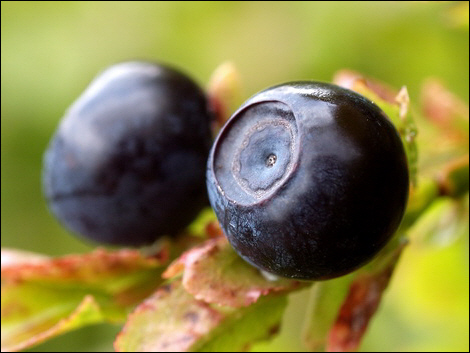
Blueberry


Blueberry is one of the highest antioxidant capacities among all fruits, vegetables, spices and seasonings. Antioxidants are necessary to optimizing fitness by helping to combat the free radicals that can damage cellular structures as well as DNA. Blueberries are small blue to black colored fruits with a green flesh. They should be rich and bright in color with a natural bloom. There are three main types of blueberries cultivated worldwide, `high bush', `low bush' and `rabbit eye', each consisting of between 1-3 predominant species.

Minerals:

Nutrients
Amounts/Selected Serving
DV%
Calcium
8.9mg
1%
Iron
0.4mg
2%
Magnesium
8.9mg
2%
Phosphorus
17.8mg
2%
Potassium
114mg
3%
Sodium
1.5mg
0%
Zinc
0.2mg 
2%
Copper
0.1mg 
4%
Manganese
0.5mg
25%
Selenium
0.1mcg  
0%
Fluoride
~
~
Vitamins:
Nutrients
Amounts/Selected Serving
DV%
Vitamin A
79.9IU
2%
Vitamin C
14.4mg
24%
Vitamin D
~
~
Vitamin E(Alpha Tocopherol)
0.8mg
4%
Vitamin K
28.6mcg
36%
Thiamin 
0.1mg
4%
Riboflavin
0.1mg
4%
Niacin
0.6mg
3%
Vitamin B6
0.1mg
4%
Folate
45.0mcg
2%
Vitamin B12
8.9mcg
0%
Pantothenic Acid
0.0mg
2%
Choline
8.9mg
~
Betaine
0.3mg
~
Calorie Information:
Nutrients
Amounts/Selected Serving
DV%
Calories
84.4(353 kJ)
4%
Carbohydrate
76.6(321 kJ)
~
Fat
4.1(17.2 kJ)
~
Protein
3.7(15.5 kJ)
~
Alcohol
0.0(0.0 kJ)
~
Carbohydrates:
Nutrients
Amounts/Selected Serving
DV%
Total Carbohydrate
21.4g
7%
Dietary Fiber
3.6g
14%
Starch
0.0g
~
Sugars
14.7g
~
Sterols:
Nutrients
Amounts/Selected Serving
DV%
Cholesterol
0.0mg
0%
Phytosterols
~
~
Fats & Fatty Acids:
Nutrients
Amounts/Selected Serving
DV%
Total Fat
0.5g
1%
Saturated Fat
0.0g
1%
Monounsaturated Fat
0.1g
~
Polyunsaturated Fat
0.2g
~
Total trans fatty acids
~
~
Total trans-monoenoic fatty acids
~
~
Total trans-polyenoic fatty acids
~
~
Total Omega-3 fatty acids
85.8mg
~
Total Omega-6 fatty acids
130mg
~
Protein & Amino Acids:
Nutrients
Amounts/Selected Serving
DV%
Protein
1.1g
2%
Others:
Nutrients
Amounts/Selected Serving
DV%
Alcohol
0.0g
~
Water
125g
~
Ash
0.4g
~
Caffeine
0.0mg
~
Theobromine
0.0mg
~
  • Blood sugar regulation
Berries are considered as low in their glycemic index (GI). GI is a common way of identifying the potential impact of a food on our blood sugar level once we've consumed and digested that food. In general, foods with a GI of 50 or below are considered "low" in terms of their glycemic index value. When compared to other berries, blueberries are not particularly low in terms of their GI. blueberries as falling as range of 40-53 somewhere like blackberries, raspberries, and strawberries repeatedly scoring closer to 30 than to 40 GI with berries. However blueberries as a low-GI fruit has found that blueberries, along with other berries, clearly have a favorable impact on blood sugar regulation in persons already diagnosed with type 2 diabetes. Participants in the study who consumed at last 3 servings of low-GI fruits per day (including blueberries) saw significant improvement in their regulation of blood sugar over a three-month period of time .It's great to see blueberries providing these clear health benefits for blood sugar regulation
  • Heart
Blueberries are readily available product with the highest antioxidant capacity among fruits and vegetables.The animal subjects on which the study was performed that were given the blueberry-rich diet demonstrated less heart damage and a lower risk of heart attacks.
  • Memory
According to study by the University of Cincinnati Academic Health Center, blueberries contain antioxidants such as anthocyanins that can help fight free radicals, reduce inflammation and improve communication among neurons in the brain. It showed that individuals beginning to suffer from age-related memory loss and brain degeneration who consumed blueberry juice daily proven improved learning and memory function, as well as improvement in symptoms of depression.
  • Obesity
One group of mice was fed a high-fat diet, another group was fed a high-fat diet along with blueberry juice, while another group was fed a low-fat diet. while the mice fed the high-fat diet alone gained both weight and body fat, the mice that were also fed the blueberry juice wound up with the same lower body fat and weight as the mice that were fed the low-fat diet. Obviously, additional study is needed, but the preliminary results on the potential of blueberries to help fight obesity are certainly encouraging.
  • Hypothyroidism
Hypothyroidism happens when your thyroid gland, at the front of your neck, doesn't produce enough thyroid hormone .There are several types of hypothyroidism. The most common is Hashimoto's thyroiditis, an autoimmune disease where the immune system mistakenly attacks the thyroid gland. The disease affects both sexes and all ages, but is most common in women above age 50. Because the thyroid gland helps to regulate your metabolism, low thyroid levels cause your body to slow down and can affect everything from appetite to body temperature. Symptoms can appear over time and can be hard to diagnose. Left untreated, hypothyroidism can cause serious health complications. Eat foods high in antioxidants, including fruits such as blueberries so that we can able to avoid attacking of hypothyroidism.
  • What Is Gout?
GOUT is one of the most painful types of arthritis, and accounts for 5 percent of all cases of arthritis. Gout is characterized by severe bouts of redness, swelling, warmth, pain, and inflammation in one or more joints. commonly the big toe is the initial joint involved, but other joints may be involved initially or become involved in recurring attacks of gout.
  • What Causes Gout?
It results from the deposit of needle-like uric acid crystals in the connective tissue, the joint space between two bones, or both. Uric acid is the end-product caused by the breakdown of purines. Purines are naturally found in the body and in many foods. It excess uric acid in the body which causes the formation of uric acid crystals. Excess uric acid in the body can be caused by an increase in production of uric acid by the bodyunder-elimination of uric acid by the kidneysincreased intake of foods high in purines Recommended Foods To Eat fresh cherries, strawberries, blueberries, and other red-blue berries

health-benefits-of-black-currants


Scientifically known as Ribes Nigrum, which means “black ribes”, black currant is an edible berry of a shrub that grows up to 1-2 meters high. Black currants are very sweet and sharp in taste. The anthocyanins present in the berries give them their rich and dark colors of red, blue and purple. They are native to central and northern Europe and northern Asia. Appreciated for their alimentary and therapeutic values, black currants contain an important complex of vitamins. They are also used in numerous food preparations, in the form of syrup, jelly, jam, fruit jelly, marmalade and liqueur. Read through the following lines to explore the nutritional value and health benefits of black currants.

Nutrition & Health Benefits of Eating Black Currants:
Black currants are known for their high content of vitamin C, GLA (Gamma-Linoleic Acid) and potassium. They contain twice the amount of potassium found in bananas, 4 times the vitamin C in oranges and twice the antioxidants in blueberries.
They contain anthocyanins that help in fighting against cardiovascular disease, aging, joint inflammation, eyestrain, urinary infections, kidney stones and even cancer.
The fruits are packed with anti-oxidant compounds that help in the prevention of dementia.
The derivatives of black currants are formulated into treatments for Alzheimer’s disease.
Black currants are used by herbalists to cure diarrhea, tonsillitis, whooping cough and gum disease.
They are also used to flavor various medicines and throat lozenges.
Drinking black currant juice is a healthy way to improve your antioxidant intake and maintain a healthy lifestyle.
The fruit intensifies weak peripheral circulation caused by menopause and cleans the blood of toxins, wastes and cholesterol.
A diet rich in black currants proves to be helpful against rheumatism, arthritis and gout.


Blackcurrants have long been regarded as having remarkable health benefits. Early European folklore has blackcurrants being used for treating general fatigue, arthritis, kidney stones, gout, inflammation of the mouth, stomach and bowel, lung and cough aliments, and as a diuretic.

Recent scientific research from eight clinical trials has shown direct effects of Blackcurrants on health and well being. A clinical trial is a comparison test of a treatment versus a placebo (inactive look-a-like), and provides the most compelling evidence that the treatment causes the expected effect on human health.

We now know that it is the high concentrations of anthocyanins, other antioxidants and bioactives in blackcurrants that give these fruit their wonderful properties.

INCREASES BLOODFLOW

Subjects consumed anthocyanin (100mg) equivalent to two tablespoons of blackcurrant berries.
→ Anthocyanin content of plasma reached a maximum after 1 hour, and decreased to 50% by 4 hours.
→ After 1 hour the forearm blood flow increased significantly (about 40%) compared to placebo.
In another study 50mg of anthocyanin was shown to improve blood circulation in cold hands.
→ Hands were soaked in cold water at 10°C for 1 minute. For subjects who had consumed blackcurrants hand temperature returned to normal after 7 minutes, compared to 13 minutes for the placebo group.

AUGMENTS BENEFITS OF EXERCISE

 A 2009 New Zealand study looked at the effectiveness of blackcurrant to augment the ability of regular exercise to enhance the immune responsiveness of the body.
Subjects consumed blackcurrant capsules, pre and post exercise equivalent to about 1/3 cup berries, for three weeks.
-significantly lower levels of bio markers of oxidative stress in plasma.
-significantly increased ability of plasma to suppress inflammatory responses.

REDUCES MUSCLE STIFFENING

Blackcurrants reduce muscle stiffness by increasing peripheral blood flow and reducing muscle fatigue.
Subjects consumed anthocyanin (50mg) equivalent to one tablespoon of blackcurrant berries and carried out keyboard work for 30 minutes.
→Total haemoglobin was significantly higher (about 40%) in the blackcurrant intake group. Oxygenated haemoglobin was significantly higher in the blackcurrant intake group.
→There was significant stiffening of the trapezius (shoulder) muscle during typing in the placebo but not the blackcurrant intake group. However, final stiffness was not significantly different between the two.
Anthocyanins from berry and grape extracts had a positive effect on chronic musculo skeletal pain (fibromyalgia). Subjects consumed anthocyanin powders for three months with the following significant effects:
→Reduced fatigue.
→Reduced sleep disturbance.
→Increased general health.

DECREASES VASCULAR INFLAMMATION

Increased intake of blackcurrant and orange juice decreased vascular inflammation and the risk of cardiovascular disorder.
A daily drink of 250 mls of blackcurrant juice and 250 mls of orange juice gave highly significant results after four weeks.
-11% decrease in C-reactive protein.
-3% decrease fibrinogen.
Lower levels of both markers indicate lower risk.

IMPROVES EYE FUNCTION AND RECOVERY

The eye takes approximately 30 minutes to fully adapt from bright sunlight to complete darkness and become one million times more sensitive than at full daylight.
→ Subjects consumed the equivalent of one tablespoon of blackcurrant berries or less.
→ Dark adaptation was significantly improved at the highest level of 50 mg anthocyanin, and two hours after consumption.
In another study, the same dose of blackcurrants was shown to greatly reduce visual fatigue following prolonged Visual Display Terminal work 2 hours after consumption.

IMPROVES KIDNEY FUNCTION

Consumption of 330 ml Blackcurrant juice daily for five days increased the
→ urinary pH
→ excretion of citric acid
→ excretion of oxalic acid.
This observation suggests that regular blackcurrant consumption could reduce the likelihood of kidney stone development as persistently low urinary pH is a significant factor for uric acid kidney stone formation.
In another study residents of a nursing home were given a daily glass of blackcurrant juice for 3 months. Residents reported reduced symptoms of urinary scalding, urgency and odour. Staff noted improvements in white cell count on urinalysis and reduced likelihood of recurrent urinary tract infection over a three month period.

Blackberry


Blackberry Fruits is the popular fruit in the world, beside it Blackberry also is the one kind of berries fruits. Today, Fruits Benefits discuss about some Benefits of Blackberry Fruit for Health, and as far as we know, there are 7 Benefits of Blackberry for our health. Blackberries has a yummy taste, and a lots of people in the world like to eat this fruit. Well, if you one of them, I think you must see and know 7 Benefits of Blackberry Fruit for Health in below.


1. Give Strong Immune system

Blackberries has a lots of vitamin C, more than Blueberries and According to Ursula Arens, a senior nutritionist from the UK, vitamin C has an important function in the body. “It’s important for our immune system and for heart health and help lower blood pressure. Vitamin C also helps increase the absorption of iron from other foods eaten at the same time so as to reduce the risk of anemia,” he said.

2. Healthy Digestion

Arens said if Blackberries is a healthy fruit that has high fiber content, more than the others fruits. “Fiber is very important for the intestine to function properly and help maintain a healthy weight, as well as improving health by helping to lower cholesterol,” he said.

3. Overcome Pain

Beside it, Blackberries also contains tannins, a substance that can help us to overcome a pain. According to Sarah Wilson, an expert in nutrition from the Princess Grace Hospital, London, rubbing berries on the injured skin will tighten the tissue so that helps constrict blood vessels and reduce bleeding.

4. Attacking Cancer Cells

Blackberries also contains flavonoid, anthocyanin and antioxidant which can help you to prevent cancer.


5. Protecting Eye

Blackberry contain lutein which serve to protect the eyes from the formation of pigment rational, which is the area most sensitive to light and is located behind the retina. Lutein helps to prevent eye damage caused by ultraviolet radiation.

6. Healthy Bones

Handful of blackberries give you almost half the recommended daily intake of manganese. As is known, manganese is the best source of minerals. “Manganese helps form the connective tissue of the body, it is important to build strong bone structure,” said Wilson.

7. Promote cell growth

Blackberries contain folate, or commonly known as vitamin B9 or folic acid, which plays an important role in healthy cell division and growth. Pregnant women are advised to consume fruit is to reduce the risk of birth defects.

Bilberry


Bilberry 

Bilberry has a long medicinal history in Europe. It has been used to treat anything from kidney stones to Typhoid fever. During World War 2 British pilots noted that Bilberry jam before a flight dramatically improved night vision. Modern research now supports these claims.

Bilberry contains anthocyanosides which are potent antioxidants which strengthen blood vessels and capillary walls, improve red blood cells, stabalize collagen tissues such as tendons, ligaments and cartilage and has cholesterol lowering effects. They also increase retinal pigments that allow the eye to tolerate light. In addition, it helps to maintain the flexibility of red blood cells, allowing them to pass through the capillaries and supply oxygen. The herb has been shown to be a vasodialator that opens blood vessels and lowers blood pressure. Since the eyes have a high concentration of capillaries, bilberry may be particularly helpful in improving eyesight. The herb has been shown to improve night vision, slow macular degeneration, prevent cataracts and diabetic retinopathy. Scientific studies have shown improvement in the eyesight, circulation, angina, stroke and atherosclerosis. It is also used to improve varicose veins and has anti-aging effects on collagen structures.

Individuals with hardening of the arteries, diabetes, high blood pressure or other conditions that increase the likelihood of damage to the small blood vessels in the eyes are more likely to have serious vision problems as a result of blood vessel damage. Note that bilberry is taken by mouth to treat eye problems. It is not used as an eye drop.

Oral bilberry preparations are also used to prevent and treat a condition known as chronic venous insufficiency, which occurs when valves in the veins that carry blood back to the heart are weak or damaged.

 Blood may collect in the veins of the legs and lead to varicose veins, spider veins, or sores on the legs. More serious results can include blood clots in the legs. Because bilberry may strengthen the walls of all blood vessels in the body. It may also relieve haemorrhoids.

In the past, dried bilberries have been used to treat diarrhea because the tannins it contains (1.5% and as much as 10%) act as an astringent to the gastrointestinal tract. An astringent shrinks and tightens the top layers of skin or mucous membranes thereby reducing secretions, relieving irritation, and improving tissue firmness. Tea brewed from dried bilberry fruits has also been used to soothe a sore throat or sore mouth tissue.

In folk medicine, bilberry leaf has been used to treat a number of conditions including diabetes. Limited evidence from a few animal studies shows that it may have a decreasing effect on blood sugar. Additionally, in at least one study, an extract of bilberry leaves may also have lowered cholesterol levels in laboratory animals. Other laboratory and animal studies have tested potential anticancer effects of bilberry. In a laboratory study, bilberry stopped the growth of both leukemia and colon cancer cells. While preliminary results suggest that anthocyanosides obtained from bilberries may also block the effects of an enzyme and other chemicals that promote tumor growth, much more study is needed. To date, no human clinical studies have confirmed any of these results from bilberry.

Recent research showed that Bilberry extract has promising anti-ulcer activity, both preventive and curative. It also has shown anti-cancer properties in animal experiments. When administered to diabetes patients, Bilberry normalised capillary collagen thickness and blood sugar levels in humans and animals.

Bilberry Herb Notes / Side Effects

Latin Names: Vaccinium myrtillus

Common Names: Airelle, Dyeberry, European Blueberry, Huckleberry, Vaccinium myrtillus, Whortleberry, Wineberry

Suggested Properties: Antioxidant. Supports normal formation of connective tissue and strengthen capillaries in the body. Anthocyanosides may also improve capillary and venous blood flow. Anti-fungal, anti-bacterial, anti-inflammatory, Antihistamine.

Uses: Kills or inhibits the growth of funguses, yeasts, and bacteria. It also kills protozoans such as Trichomonas vaginalis. Prevents capillary fragility and Improves vision.

Atherosclerosis, Bruising, Cataracts, Circulation, Diabetes, Diarrhea, Macular degeneration, Night blindness, Retinopathy, Varicose veins.

Indicated for: Has the potential for the prevention of thrombosis and may reverse attacks of angina from results of 

Breadfruit


Breadfruit (Artocarpus altilis) is a species of flowering tree in the mulberry family, Moraceae, growing throughout Southeast Asia and most Pacific Ocean islands. Its name is derived from the texture of the cooked fruit, which has a potato-like flavor, similar to fresh-baked bread.
Ancestors of the Polynesians found the trees growing in the northwest New Guinea area around 3,500 years ago. They gave up the rice cultivation they had brought with them from Taiwan, and raised breadfruit wherever they went in the Pacific (except Easter Island and New Zealand, which were too cold). Their ancient eastern Indonesian cousins spread the plant west and north through insular and coastal Southeast Asia. It has, in historical times, also been widely planted in tropical regions elsewhere.

Breadfruit trees grow to a height of 85 feet (26 m). The large and thick leaves are deeply cut into pinnate lobes. All parts of the tree yield latex, a milky juice, which is useful for boat caulking.
The trees are monoecious, with male and female flowers growing on the same tree. The male flowers emerge first, followed shortly afterward by the female flowers, which grow into capitula, which are capable of pollination just three days later. The pollinators are Old World fruit bats in the family Pteropodidae. The compound, false fruit develops from the swollen perianth, and originates from 1,500-2,000 flowers. These are visible on the skin of the fruit as hexagon-like disks.
Breadfruit is one of the highest-yielding food plants, with a single tree producing up to 200 or more fruits per season. In the South Pacific, the trees yield 50 to 150 fruits per year. In southern India, normal production is 150 to 200 fruits annually. Productivity varies between wet and dry areas. In the Caribbean, a conservative estimate is 25 fruits per tree. Studies in Barbados indicate a reasonable potential of 6.7 to 13.4 tons per acre (16-32 tons/ha). The grapefruit-sized, ovoid fruit has a rough surface, and each fruit is divided into many achenes, each achene surrounded by a fleshy perianth and growing on a fleshy receptacle. Some selectively bred cultivars have seedless fruit.
The breadfruit is closely related to the breadnut, from which it might have been selected, and to the jackfruit.

Breadfruit, an equatorial lowland species, grows best below elevations of 650 metres (2,130 ft), but is found at elevations of 1,550 metres (5,090 ft). Its preferred rainfall is 1,500–3,000 millimetres (59–120 in) per year. Preferred soils are neutral to alkaline (pH of 6.1-7.4) and either sand, sandy loam, loam or sandy clay loam. Breadfruit is able to grow in coral sands and saline soils.[2]

Breadfruit is a staple food in many tropical regions. The trees were propagated far outside their native range by Polynesian voyagers who transported root cuttings and air-layered plants over long ocean distances. Breadfruit are very rich in starch, and before being eaten, they are roasted, baked, fried or boiled. When cooked, the taste of moderately ripe breadfruit is described as potato-like, or similar to fresh-baked bread. Very ripe breadfruit becomes sweet, as the starch converts to sugar.

Because breadfruit trees usually produce large crops at certain times of the year, preservation of the harvested fruit is an issue. One traditional preservation technique is to bury peeled and washed fruits in a leaf-lined pit where they ferment over several weeks and produce a sour, sticky paste. So stored, the product may last a year or more, and some pits are reported to have produced edible contents more than 20 years later.[3] Fermented breadfruit mash goes by many names such as mahr, ma, masi, furo, and bwiru, among others.

Most breadfruit varieties also produce a small number of fruits throughout the year, so fresh breadfruit is always available, but somewhat rare when not in season.
Breadfruit can be eaten once cooked, or can be further processed into a variety of other foods. A common product is a mixture of cooked or fermented breadfruit mash mixed with coconut milk and baked in banana leaves. Whole fruits can be cooked in an open fire, then cored and filled with other foods, such as coconut milk, sugar and butter, cooked meats, or other fruits. The filled fruit can be further cooked so the flavor of the filling permeates the flesh of the breadfruit.
The Hawaiian staple food called poi, made of mashed taro root, is easily substituted or augmented with mashed breadfruit. The resulting “breadfruit poi” is called poi ʻulu. In Puerto Rico, it is called panapen or pana, for short. Pana is often served boiled with a mixture of sauteed bacalao (salted cod fish), olive oil and onions. It is also served as tostones or mofongo. In the Dominican Republic, it is known by the name buen pan or "good bread". Breadfruit is also found in Indonesia and Malaysia, where it is called sukun. In the South Indian state of Kerala and coastal Karnataka, especially on the sides of Mangalore, where it is widely grown and cooked, it is known as kada chakka or seema chakka and deegujje, respectively. In Belize, the Mayan people call it masapan.
Breadfruit is roughly 25% carbohydrates and 70% water. It has an average amount of vitamin C (20 mg/100 g), small amounts of minerals (potassium and zinc) and thiamin (100 μg/100 g).[4]
Breadfruit was widely and diversely used among Pacific Islanders. Its lightweight wood (specific gravity of 0.27)[5] is resistant to termites and shipworms, so is used as timber for structures and outrigger canoes.[6] Its wood pulp can also be used to make paper, called breadfruit tapa.[6] It is also used in traditional medicine to treat illnesses that range from sore eyes to sciatica.[6] Native Hawaiians used its sticky sap to trap birds, whose feathers were made into cloaks.[7]

Sir Joseph Banks and others saw the value of breadfruit as a highly productive food in 1769, when stationed in Tahiti as part of the Endeavour expedition commanded by Captain James Cook. The late-18th-century quest for cheap, high-energy food sources for British slaves prompted colonial administrators and plantation owners to call for the introduction of this plant to the Caribbean. As President of The Royal Society, Banks provided a cash bounty and gold medal for success in this endeavor, and successfully lobbied his friends in government and the Admiralty for a British Naval expedition. In 1787, William Bligh was appointed Captain of the HMS Bounty, and was instructed to proceed to the South Pacific for this task. Banks appointed a gardener for the expedition and gave detailed instructions on how the plants were to be maintained. The Bounty remained in Tahiti for five idyllic months, during which over 1000 plants were collected, potted and transferred to the ship. However, within a month of leaving, many of the crew mutinied, expelling Captain Bligh and supporters in a long-boat, and returned to Tahiti. Bligh survived the ordeal, sailing with 18 loyal crew the 6710 km to Timor, reaching there in late 1789. In 1791, Bligh commanded a second expedition with the Providence and the Assistant, which collected live breadfruit plants in Tahiti and transported these to St Helena, in the Atlantic, and St Vincent and Jamaica in the West Indies. Although Bligh won the Royal Society medal for his efforts, the introduction was not entirely successful, as the slaves refused to eat breadfruit.[8]

According to an etiological Hawaiian myth, the breadfruit originated from the sacrifice of the war god Kū. After deciding to live secretly among mortals as a farmer, Kū married and had children. He and his family lived happily until a famine seized their island. When he could no longer bear to watch his children suffer, Kū told his wife that he could deliver them from starvation, but to do so he would have to leave them. Reluctantly she agreed, and at her word, Kū descended into the ground right where he had stood until only the top of his head was visible. His family waited around the spot he had last been, day and night, watering it with their tears until suddenly, a small green shoot appeared where Kū had stood. Quickly, the shoot grew into a tall and leafy tree that was laden with heavy breadfruits that Kū's family and neighbors gratefully ate, joyfully saved from starvation.[9]
Though they are widely distributed throughout the Pacific, many breadfruit hybrids and cultivars are seedless or otherwise biologically incapable of naturally dispersing long distances. Therefore, their distribution in the Pacific was clearly enabled by humans, specifically prehistoric groups who colonized the Pacific Islands. To investigate the patterns of human migration throughout the Pacific, scientists have used molecular dating of breadfruit hybrids and cultivars in concert with anthropological data. Results support the west-to-east migration hypothesis, in which the Lapita people are thought to have traveled from Melanesia to numerous Polynesian islands.[10]
The world’s largest collection of breadfruit varieties has been established by botanist Diane Ragone, from over 20 years' travel to 50 Pacific islands, on a 10-acre (40,000 m2) plot outside of Hana, Hawaii, on the isolated east coast of Maui.[11]
The wood of the breadfruit tree was one of the most valuable timbers in the construction of traditional houses in Samoan architecture.

There are many ways to cook breadfruit. In countries such as Sri Lanka, it is either cooked as a curry using coconut milk and spices (which becomes a side dish) or consumed after boiling. Boiled breadfruit is a famous main meal and is often consumed with scraped coconut, or "sambal" made out of coconut and chilies. Fritters of Breadfruit is also a local delicacy of coastal Karnataka.

In Seychelles it was traditionally eaten as a substitute for rice, as an accompaniment to the mains. It would either be consumed boiled (friyapen bwi) or grilled (friyapen griye), where it would be put whole in the wood fire used for cooking the main meal and then taken out when ready. It is also eaten as a dessert, called ladob friyapen, where it is boiled in coconut milk, sugar, vanilla, cinnamon and a pinch of salt.
It is often said in Seychelles, that travelers that visit Seychelles will always come back if they eat breadfruit cooked in Seychelles.

In Puerto Rico it is traditionally eaten boiled with bacalao (salted codfish). It is also used to make rellenos de pana (mashed breadfruit filled with seasoned meat, mofongo, tostones de pana (double fried breadfruit), and even lasagna de pana (cooked mashed breadfruit layered with meat and topped with cheese). There is a popular dessert also made with breadfruit: flan de pana (breadfruit custard).

Breadfruit is low in Saturated Fat, Cholesterol and Sodium and very high in Vitamin C, Dietary Fiber and Potassium. The nutritional value of breadfruit helps you to maintain optimum health. Breadfruit has been considered as a nutritionally beneficial fruit. A large amount of nutrients and useful calories can be obtained by eating breadfruit. Other than the contents given in the table, the fruit also consists of 70.9 g of water content and 1.2 g of Protein content in it.

Minerals ( Per 100 g)
Phosphorus
30 mg
Calcium
17.1 mg
Sodium
2.0 mg
Potassium
490.3 mg
Iron
0.5 mg
Magnesium
25 mg
Zinc
0.1 mg
Copper
0.13 mg
Manganese
0.11 mg

Vitamins (Per 100 g)
Pantothenic Acid
0.5 mg
Vitamin B1 (thiamine)
0.2 mg
Niacin
0.9 mg
Vitamin B6
0.1 mg
Choline
9.81 mg
Vitamin C
29.1 mg
Vitamin E
0.1 mg

THIS 12 THINGS CHANGE YOUR LIFE TO BECOME POSITIVE

Transform Your Life: Embracing Positive Every Step of the Way 1. Are you a 6 am riser?   Get up ten minutes earlier at 5.50 and get used t...